
No items found.
Beware of false prophets who come to you in sheep’s clothing, but who inwardly are ravening wolves.
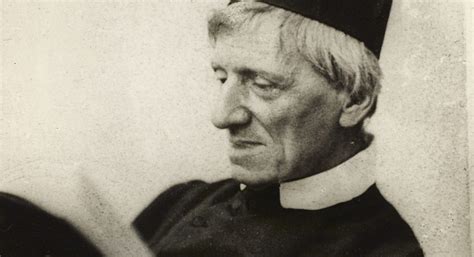
Last November St John Henry Newman was declared a Doctor of the Church, joining the ranks of the great Catholic teachers, like St Augustine of Hippo or St Gregory the Great. At the same time he was also made, along with St Thomas Aquinas, a co-patron of Catholic Education. This was not so much remarked on, but it is interesting and significant.
We can say that there are essentially two ways of “doing theology”: the rational and systematic, broadly speaking the method of Aquinas, and the historical, Newman’s method.
In making these declarations Leo XIV was doing exactly the same thing that his predecessor Leo XIII did when he made Newman a Cardinal in 1879. He was giving encouragement for John Henry Newman’s pioneering revival in 19th Century Oxford of historical theology. Newman recognised this and said at the time, “The cloud is lifted from me for ever.” In the same year that Leo XIII made Newman a Cardinal he also issued the Encyclical Aeterni Patris which declared St Thomas Aquinas to be the Church’s teacher par excellence and began the modern revival of Thomistic thought. That great Pope was, to use a pregnant expression of Pope St John Paul II in another context, allowing the Church to breathe with both lungs.
All this came to my mind because my heart sank when I read today’s Gospel.
Beware the false prophets who come to you in the clothing of sheep, but who inwardly are ravening wolves?
How can I preach about this text, in the context of the tragic divisions which have opened up in the Church in the last month between people who ought to be on the same side in what Newman described, in the joy of his own conversion, as “the one fold of the redeemer”?
Whatever position a priest may take, the homily apparently writes itself. Beware the SSPX who come to you in the clothing of sheep.... Beware the modern Roman Church who inwardly are ravening wolves? It is an invitation to fill in the gaps and to come a conclusion we have already predetermined we want to reach.
I went back in my mind, to early days at the Birmingham Oratory, 40 years ago. Along with my fellow novices I used often to visit an elderly parishioner, attached to the Old Mass, who mixed a very strong gin and tonic and who had a talent for good one liners. (It says a lot for the senior Fathers that they trusted us to visit even though they would not have agreed with what was said!)
“Brothers,” the old chap would say to us, about the Novus Ordo High Mass at the Oratory, “Beware of Miss Normativa, even when she comes to you speaking Latin and wearing lace...!” It was his version of today’s Gospel, wittily put, and for that reason memorable, but too easy and, in the end, wrong.
Beware the false prophets who come to you in the clothing of sheep, but who inwardly are ravening wolves?
However we argue, the homily that writes itself produces facile answers which, in fact, tell us nothing.
So I hit upon the idea of looking up what the ancient Fathers of the Church wrote about today’s Gospel. There is no easier or quicker way of doing this then by consulting the Catena Aurea of Saint Thomas Aquinas. (It is a very useful compendium of quotations from the Fathers, covering each of the four Gospels.) Newman prepared an edition of this in 1841 at precisely the time in his life when he was coming to the conclusion that he had no choice but to join the Roman Church. So it also happens to be the best example, in all his writings, where Newman’s thought comes together with that of Aquinas, the historical and the systematic singing, so to speak, together in harmony.
I was, of course, none the wiser for having done this. I found St Gregory was writing in opposition to one error and St Jerome to another, each of them, great Doctors of the Church though they were, using a scriptural text in precisely the rhetorical way I have described, to make a particular point. The points were powerful certainly; intellectually compelling and relevant to our present circumstances? Not so much! But what it did give me was access to the conflicts raging John Henry Newman’s mind in the 1830’s and 1840’s. How can I know? What should I do? Which side should I be on?
Not that there were not some useful passages. St Augustine warned against the use of numerical weakness as a mark of doctrinal purity.
When the Lord had said that there were few that find the strait gate and narrow way, that heretics, who often commend themselves because of the smallness of their numbers, might not here intrude themselves, He straightway subjoins, Take heed of false prophets.
We can’t use the “small but pure” argument.
One must equally argue that great numbers tell us nothing either. It is quite possible for majorities to get it wrong, in the ancient world as much as the modern. As Newman wrote in his Apologia it is not that, for the moment, the multitude may not falter in their judgment.
Authority has proved itself consistently unreliable throughout the history of the Church. Newman continues in the same passage: It is not that, for the moment, the multitude may not falter in their judgment, - not that, in the Arian hurricane, sees more than can be numbered did not bend before its fury, and fall off from St. Athanasius, - not that the crowd of Oriental Bishops did not need to be sustained during the contest by the voice and the eye of St. Leo.
If the Reformation teaches us anything it is that reason, gift of God though it is, will lead us astray when the axioms with which we populate our syllogisms, are misguided or plain wrong. The conclusions will always be erroneous. The so-called reformers were as scholastic in their method as the theologians of the Council of Trent. This is how we account for the fissiparous result of the 16th and 17th Century controversies, the splintered nature of the Church since that tragic time; for the Lutherans, the Calvinists, the Zwinglians, and the countless other names we give to the fragments of the shattered body of Christ, to the threads of his seamless robe.
There was one other illuminating quotation from the Catena Aurea that was, in fact useful, from the Commentary of St Augustine on the Sermon on the Mount:
Wherefore it is justly asked, what fruits then He would have us look to? For many esteem among fruits some things which pertain to the sheep’s clothing, and in this manner are deceived concerning wolves. For they practise fasting, almsgiving, or praying, which they display before men, seeking to please those to whom these things seem difficult. These then are not the fruits by which He teaches us to discern them. Those deeds which are done with good intention, are the proper fleece of the sheep itself, such as are done with bad intention, or in error, are nothing else than a clothing of wolves; but the sheep ought not to hate their own clothing because it is often used to hide wolves. What then are the fruits by which we may know a good tree? The ..... Apostle teaches, saying, The fruits of the Spirit are love, joy, peace.
We must not give up what is good just because it is used by others in ways that may deceive us. Test everything; hold fast to what is good.
So, to return to John Henry Newman’s mind in the 1840’s, to his dilemma which is also our own - how can I know, what should I do, which side should I be on?
It is to look for that good, for those fruits, not in reason alone (which can so easily be misguided); not by authority alone (which has been so often wrong); not by numbers (which can deceive us as much by their smallness as by their greatness). In order to find the truth we must look to the seamless robe of Christ, to what the Church has held fast to, taught and suffered for, at all times and in all places.
In August 1839 an article was put into Newman’s hands by a friend, which contained words from St Augustine which summarised, in four brief words, his historical method in theology, which became the key to the resolution of his dilemma, and which, six years later led him into the Catholic Church. Securus judicate orbis terrarum. The whole world judges securely. By the whole world St Augustine means the whole Church Catholic as it has been manifested throughout history and whose teaching has been there to be found (in some form and by some people) at all times and in all places since it was revealed definitievely by Christ to his apostles.
Newman wrote: For a mere sentence, the words of St. Augustine, struck me with a power which I never had felt from any words before. To take a familiar instance, they were like the "Turn again Whittington" of the chime; or, to take a more serious one, they were like the "Tolle, lege,—Tolle, lege," of the child, which converted St. Augustine himself. "Securus judicat orbis terrarum!"
Newman is notoriously hard to quote from (which does not stop me) but if you would like one short sentence, here it is. The deliberate judgment, in which the whole Church at length rests and acquiesces, is an infallible prescription and a final sentence against such portions of it as protest and secede.
To those who favour Aquinas and would downplay Newman I would say no one was more historically informed in his time, or better read in the Fathers of the Church than Aquinas; arguments against an exclusively rational approach to theological investigation are to be found across his writings: “We have a more perfect knowledge of God by grace than by reason ( Summa Theologiae 1:13:13 sed contra). Aquinas certainly values system, argument and logical deduction, he, too, is aware of their limits and dangers.
To those who favour Newman and would downplay a Thomistic approach, I would say no one was more rigorous in argument than Newman, no one more of a controversialist in his time; but that that the experience wrought by the passage of time from the 13th to the 19th Centuries (not least splintering the brought about by the Protestant Reformation) was not available to Aquinas. His world was smaller and more unified. Newman reached the conclusions he did because he understood that in theology, as in warfare, it is fatal to rely on one kind of weapon alone. We need authority, we need reason, we need scripture, we are encouraged by large numbers and sometimes even by the purity of small one. But to judge all of this we need to take a historical perspective.
In a moment, we will recite the Creed. I believe in one, holy, catholic, and apostolic Church. I affirm the unity of the Church, even when it is not clearly manifested; I bear witness to the holiness of the Church as a whole, even when individual members do not show it; I rejoice in its Catholicity, its summons to everyone everywhere and at all times; I give thanks for its apostolicity, its unique link, through the apostles, in word and in sacrament, to Christ himself. To say the Creed is to say (along with St John Henry Newman and with St Augustine), securus judicat orbis terrarum, the whole world judges with certainty. It is to rejoice – as we ourselves are shortly to do – in the Catholic Church as the “one fold of the Redeemer”.

