No items found.
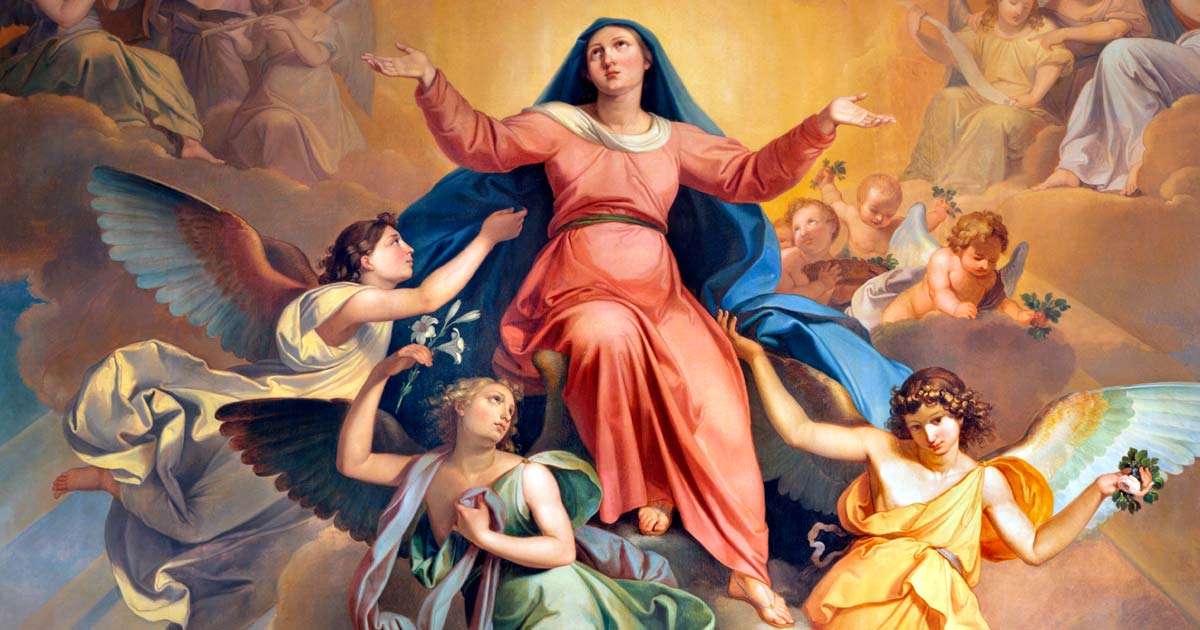
“You are the glory of Jerusalem, you are the joy of Israel, you are the highest honour of our race.”
Dobbie’s grave has been saved for the nation. Rapacious developers, laying a cable between Wales and Ireland, threatened to destroy the flag and flower strewn cairn marking the freedom-loving elf’s last resting place on a beach in Pembrokeshire. Brave protesters put a stop to the outrage. [The Guardian 10/08/26]
Don’t be concerned if you don’t know what I’m on about. It is probably a mark of sanity. Dobbie is a character in the Harry Potter novels who falls foul of the evil Lord Voldemort and whose burial, in the films at least, takes place on a beach in West Wales. It has become a place of pilgrimage.
It says something about our present time that sentimental attachment to the burial place of a fictional elf caused such a storm - and that feeling triumphed over fact. (It seems that genuine Bronze Age remains are, in fact, at risk from the route actually chosen.)
I mention this “silly season” news story only because today we are celebrating the exact opposite. We are celebrating not a fictional person but a real person, Mary the Mother of Jesus. She had no grave at all. The Declaration of the Doctrine of the Assumption tells us that “Mary, at the end of her earthly life, was taken body and soul into heaven.” Our Lady (unlike all the other saints) had no grave or shrine precisely because her body was not left on earth. Many might think that both Catholics and diehard Potter fans are mad. Dobbie is an elf! Surely nobody believes in the Resurrection of Jesus any more, let alone the Assumption of his Mother!
The key phrase in the Church’s declaration is “body and soul”. If we lack the supernatural gift of faith we are committed to believing that there is no such thing as life after death. All that can be known for certain is the product of reason and experience. We are nothing but our physical bodies. These are subject to immutable laws of physics and biology. We are further committed to some form of determinism. We are not ultimately truly free. In such a limited vision of the world there is no space for objective morality, no ultimate purpose for humanity. We are without hope. But human beings, made in the image and likeness of God, are more than our physical bodies.
A Christian is likely to be more sympathetic to a more spiritual and imaginative vision of reality. However, we need to be careful here, too. We are not just souls. My soul is not the “real me” trapped inside an earthly body, waiting for the liberation of death. We cannot be whoever we want to be, independent of our bodily reality with its gifts and limitations. If we really believe “we can be whoever we want to be provided we want it enough” we are destined to cause a great deal of harm in our effort to achieve our goal. We are also doomed to disappointment because it simply isn’t true. We are without hope. But human beings, made in the image and likeness of God, are not disembodied spirits.
I am certainly not knocking science. I appreciate the wonders of modern medicine - for example - as much as anyone. I am certainly not knocking fiction - or any other artistic endeavours for that matter. Imagination is the means whereby we make sense of our world. I am suggesting that we should be aware of the limitations of both and the danger that comes from being attached too much to one or the other. We need a vision of reality that is informed by both but which is also informed by the truths we receive from God – and which we can receive from no other source.
J.K. Rowling is, in some ways, our new best friend. I greatly admire her bravery in standing out against “trans” ideology which causes as much trouble for those genuinely struggling to know their sexual identity as it does for everyone else. It is obvious that when a six foot man identifies as a woman and competes in women’s sporting competitions then women’s sporting competitions are finished. For speaking this obvious truth J.K. Rowling has been “cancelled” - but she keeps going.
I certainly don’t take the view that her tales of witchcraft and wizardry are leading impressionable young people into the occult. They provide their young readers (and they are for young readers) with a good moral code that will see them through most situations in life and which is not unique to Christianity. It is, in fact, based on the natural law: respect the truth, be kind to your friends, stand up to bullies and be a good sport. It’s as English as Paddington. If you have impeccable manners in every situation and always carry a marmalade sandwich in your hat you can’t go far wrong.
When St John Henry Newman founded the Catholic University of Ireland he started Faculties of Medicine, of Natural Science, of Classics and of Literature. He wanted a university to be what its name implies, a place of universal knowledge and understanding. The physics was rigorous, objective science; the literature that of Pagan Greece and Rome and Protestant England. It was important that the Catholics of Ireland, up to that point deprived of education, should have the real thing. He also understood that it was vital that it should have a Faculty of Theology. He greatly respected the idea of the English gentleman. There is a celebrated passage in his book The Idea of a University where he praises the type. He would have respected the moral code of both Harry Potter and of Paddington.
Newman was also aware of the limitations of a gentlemanly, socially acceptable, liberal, moral education that takes no account of God. He wrote: Quarry the granite rock with razors, or moor the vessel with a thread of silk; then may you hope with such keen and delicate instruments as human knowledge and human reason to contend against those giants, the passion and the pride of man. We need a morality founded on a real understanding of man’s origin and his end in God.
All this remains important for us today. It is not mere “angels on a pinhead” theological speculation. We cannot, as many seem to believe, identify as whatever we wish: a man as a woman or a woman as a man; nor can anyone who wishes it identify themselves (or another) as a Professor at the University of Cambridge. The failure to acknowledge the truth about ourselves, our spiritual aspirations, our human limitations and the total dependence of every one of us on God, will result in suffering and even tragedy.
The news of the suicide of Jason Arday came while I was thinking about what to say at this Mass. We must pray for his soul, even though he has taken his own life. He is as much a victim as anyone in this sad story. It is a case of invincible ignorance. He is victim of those who promoted him, not on account of his own abilities, or because of his genuine gifts (of which, no doubt there were many) but simply to appear virtuous themselves or to bring a certain kind of world into existence simply by wishing it so. Whatever we make of the way in which media storm arose in response to questions about his academic credentials (and such scrutiny is an essential feature of academic life) Jason Arday could no longer keep going.
Newman concluded the passage I quoted above with these words: We attain to heaven by using this world well, though it is to pass away; we perfect our nature, not by undoing it, but by adding to it what is more than nature, and directing it towards aims higher than its own.
The grave of a fictional character, Dobbie the Elf, brought about the relatively minor feat of the relocation of an undersea cable. That tells us something about the power of fiction. But we must not forget that it is still just that, fiction. When we live by our stories, especially by our wishful thinking, the result is tragedy. Stories may help us to understand but they do not define who we are.
Mary, the Mother of Jesus, at the end of her earthly life, was taken body and soul into heaven. The lack of an earthly resting place for Our Lady’s body, one of the things we celebrate on today’s feast of her Assumption into Heaven, teaches us a more profound truth. God loves, and wants to redeem everything of us that he has made, our body and our spirit, for we are both. Every gift Mary had came from God. She was completely dependent on him. She, after her Son, Jesus Christ, is the first fruits, the first of the redeemed, the foretaste and promise of what we ourselves can become. She is “the glory of Jerusalem, the joy of Israel, the highest honour of our race.”